


Lifecycle management of compute, storage, networking, and data center environments with proactive health checks and change control aligned to your business.
Cloud gets the headlines — but most enterprises still run critical workloads on servers, storage, virtualization, and data center networks that demand the same operational discipline. Sysgenix Infrastructure Management is the practice that keeps that estate healthy: monitoring, patching, capacity planning, and change control aligned to your SLAs.
Whether you are fully on-premises, hybrid, or colo-hosted, we operate compute, storage, and network layers as a unified platform — with runbooks, escalation paths, and reporting that match the rigor of our cloud and security practices.
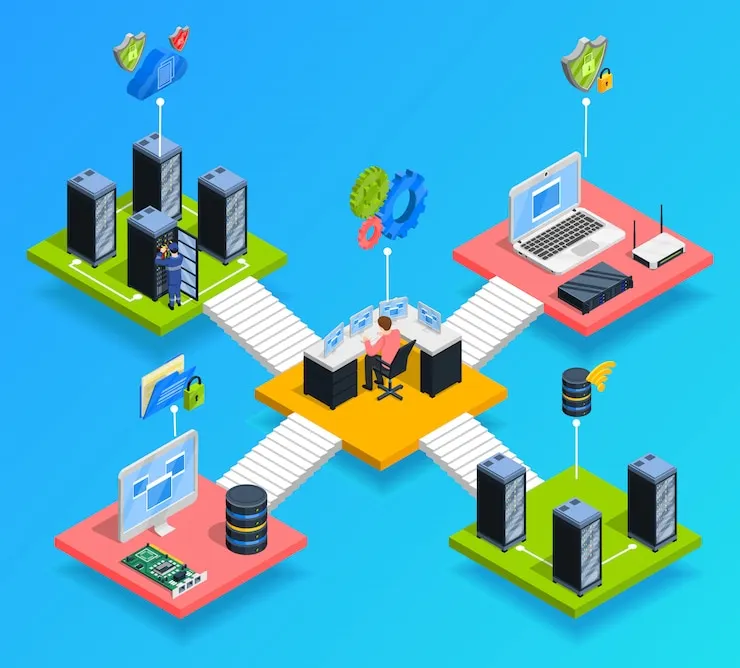
From hypervisor to SAN — one operations practice for monitoring, change, capacity, and incident response on your on-prem and hybrid estate.
Infrastructure Management is scoped to the environments you run today — with a single operating model whether assets sit in your data center, a colo, or at the edge.
Pair with Cloud Operations for public-cloud workloads and Security & Network Operations for unified threat and network monitoring — one partner, complementary practices.
Scale coverage from monitored-and-maintained to fully operated 24×7 — without changing partners or operational culture.
Monitoring and business-hours operations
Business-hours SLAs
P1–P4 acknowledge, response, and resolution targets scoped to 8×5 coverage — finalized during onboarding.
24×7 ops with proactive lifecycle management
Full incident matrix
P1–P4 acknowledge, response, and resolution targets for 24×7 coverage — detailed in the SLA section below.
Multi-site governance and custom SLAs
Tailored SLAs
Enhanced P1 commitments, named escalation paths, and multi-site governance documented in your MSA.
Every engagement starts with an infrastructure discovery — we map your estate, criticality, and operational gaps before recommending a tier that fits your risk and budget.
Acknowledge, respond, and resolve — severity-based targets for infrastructure incidents, defined in your MSA and reported with full transparency.
Targets shown reflect the Operations tier with 24×7 coverage. Foundation uses business-hours matrices; Enterprise engagements include enhanced P1 targets and custom escalation paths — all documented in your master services agreement.
A predictable takeover that gets your on-prem and hybrid infrastructure operated to enterprise standards inside one month.
Inventory compute, storage, network, and virtualization — topology, criticality, monitoring gaps, and technical debt captured in a baseline scorecard.
Tier selection, SLA matrix, runbook priorities, and change windows agreed with your stakeholders and existing vendors.
Close critical gaps: monitoring coverage, patch baseline, backup validation, and on-call wired to your ticketing and chat channels.
Daily infrastructure operations under SLA — monthly reporting, quarterly capacity reviews, and a shared improvement backlog.
Infrastructure Management is day-two operations for on-prem and hybrid compute, storage, and virtualization — monitoring, patching, capacity, and incidents. Cloud Operations covers public cloud platforms. AMC is annual hardware maintenance. Many clients use all three under one Sysgenix operating model.
Yes. We operate multi-hypervisor estates daily — cluster health, HA validation, patching, and capacity planning are part of standard runbooks regardless of platform.
Absolutely. Common models include us as primary on-call with your team as escalation, or we handle nights and weekends while your staff owns business-hours changes. Roles are defined in the onboarding design phase.
We coordinate remote hands, smart hands, and vendor access at colo facilities — with documented procedures for parts replacement, cabling, and emergency walk-throughs.
Quarterly capacity and lifecycle reviews flag assets approaching EOL, warranty expiry, and performance limits — with refresh options and budget estimates so leadership can plan capital cycles early.
No. Foundation tier provides business-hours operations for steady estates. Operations and Enterprise tiers add 24×7 incident response when production infrastructure cannot wait until morning.
Sysgenix works with ambitious teams to design and build secure, scalable web platforms. Our focus is long-term performance, clean architecture, and systems that evolve as your business grows.
Tell us about your product, platform, or challenge. We’ll help you map the right technical direction.